Surface Finishes & Textures
AeroSignage aged copper colors, CNC texture files, relief sample boards, mixed surface treatments, and how buyers should specify finish targets before quotation.

Quick answer for buyers
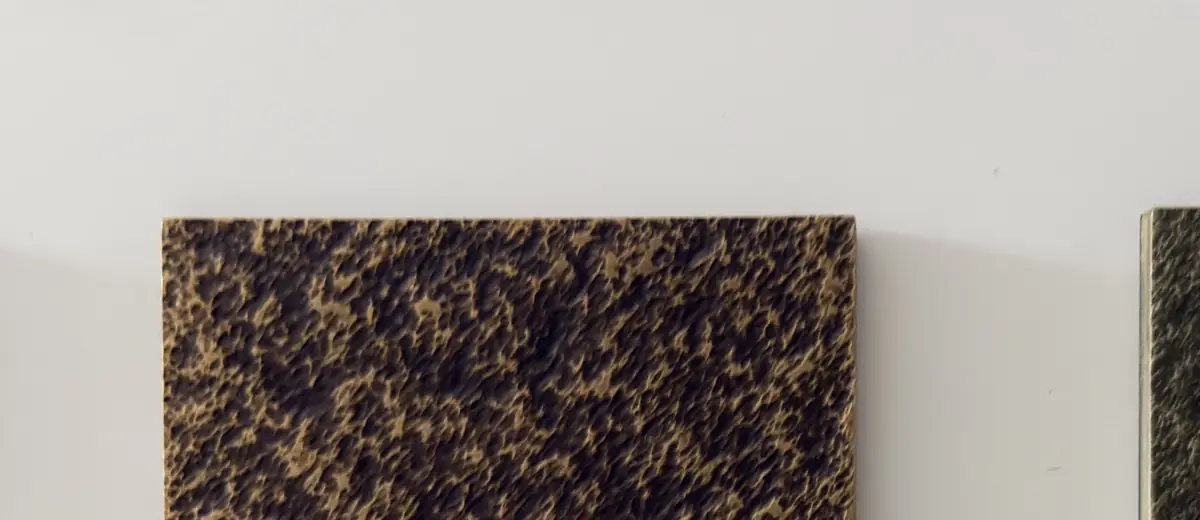
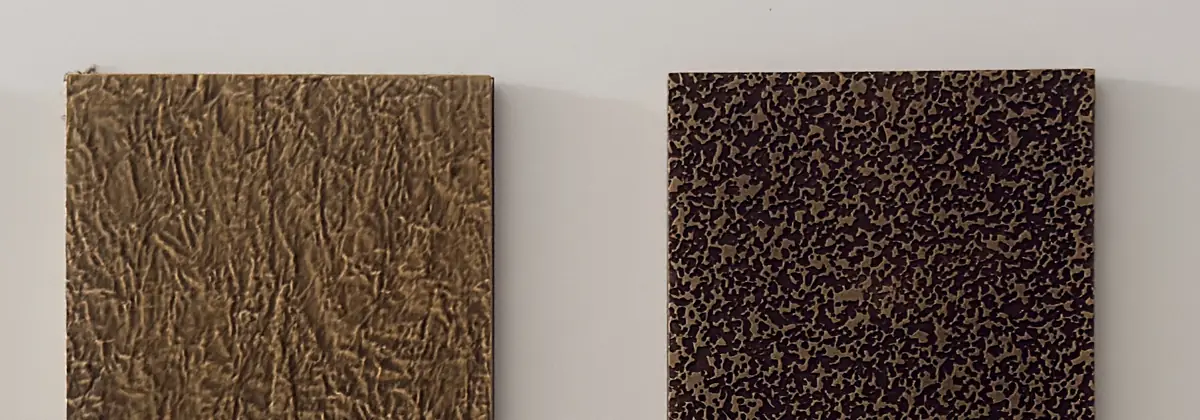
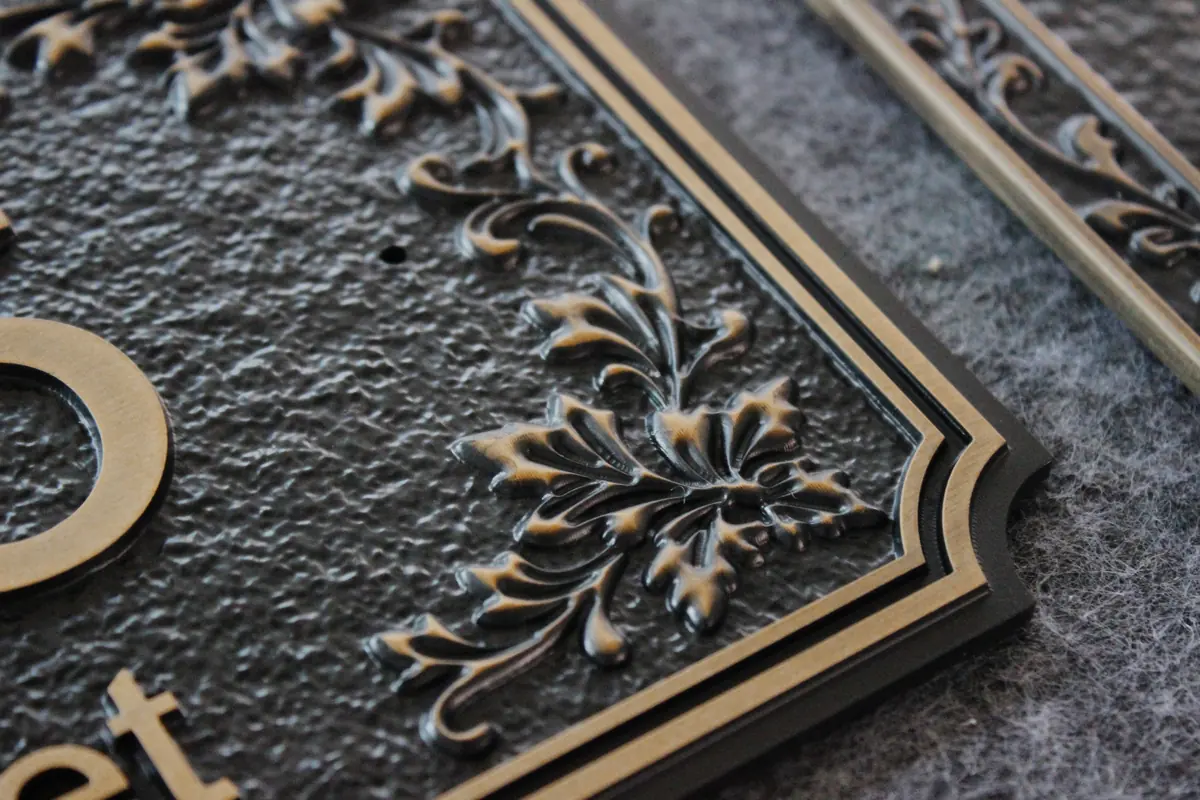
AeroSignage surface finishes give custom architectural signs their commercial value because the final impression comes from depth, texture, color, polish, and material contrast together. Source materials show common aged directions such as red antique copper, yellow antique copper, and blue-green antique copper, with selected mixed two-color effects possible when the design supports it. CNC relief files can create borders, grains, three-dimensional characters, and decorative backgrounds before finishing begins. After carving, signs can use paint, oxidation, UV detail, polishing, brushing, electroplating, aging effects, or mixed finishes. The sample boards shown publicly are references for buyer discussion, not limits. A serious RFQ should include the desired finish photo, color target, material route, installation context, and whether the finish is decorative, exterior-facing, or part of a larger coordinated sign package.
Why finish proof matters
Two signs with the same shape can feel completely different after finishing. A flat gold color, polished metal highlight, brushed surface, antique copper patina, oxidized green tone, or black-gold combination will change how the sign reads in a hotel corridor, villa entrance, restaurant wall, or exterior address location. That is why finish references are as important as the artwork file in a custom signage RFQ.
Aged copper color language
Common aged finishes include red antique copper, yellow antique copper, and blue-green antique copper. These can be used separately or selectively blended when a project needs more tonal depth. The buyer should avoid vague requests such as only "bronze" or "antique." A better request includes a photo, sample target, color expectation, whether highlights should be polished, and whether the aged effect belongs on the border, numeral, background, or entire plaque.
Textures are controlled by files
The sample board shows common borders, relief strokes, and dimensional characters, but the texture is not limited to the board. If a designer prepares a different CNC relief file, the toolpath can produce a new background grain, ornament, border, or letter effect. This is important for hotels and boutique projects because the sign can echo interior materials or brand motifs without relying on one fixed catalog texture.
Combining finish with material choice
Aluminum, brass-effect metal, acrylic, ceramic, stone-look surfaces, resin, wood-style panels, and stainless steel do not behave the same way in production. A finish that works on one substrate may need a different route on another. During RFQ review, AeroSignage connects the buyer finish target with material thickness, carving depth, installation environment, expected handling, lighting, and whether the sign should be indoor decorative, exterior-facing, or part of an illuminated module.
How to approve a finish before production
For serious projects, buyers should request sample photos, close-up images, or finish confirmation before full production. The most useful review checks are color tone, aged distribution, edge polish, background texture, raised-number clarity, and whether the finish matches the project design intent under real lighting. If the order is large, a physical sample or first-article confirmation can be discussed before producing all units.
How this supports a premium look without overbuilding
Traditional casting can create depth but may not be economical for every custom plaque, room number, or villa address. CNC relief plus finish treatment gives buyers a practical middle path: strong visual depth, custom surface language, flexible number combinations, and lower tooling friction. This is especially relevant for boutique hospitality and residential projects where beauty, cost control, and customization all matter.
Real product and process photos
Product photos and specifications are quotation references. Final material, dimensions, finish, mounting, availability, and any order-specific compliance requirements are confirmed in writing before production.
Official resources for buyer review
Use these official AeroSignage resources when sharing the product range with a project owner, procurement team, designer, or contractor.
A compact PDF catalog for sharing product families, finish directions, and RFQ preparation notes with hotel, apartment, villa, and commercial buyers.
Room schedule CSV Download room schedule template for hotel room number signsA lightweight CSV template for room numbers, floors, quantities, dimensions, finishes, mounting, lighting, and packing labels.
Sign schedule CSV Download sign schedule checklist for hotel and architectural projectsA project-wide checklist for room signs, wayfinding plates, restroom signs, exterior plaques, and zone-by-zone approval notes.
RFQ template CSV Download custom signage RFQ templateA compact RFQ template for buyers who want to send size, material, finish, quantity, artwork, installation, and delivery details by email or WhatsApp.
YouTube channel YouTube channel: AeroSignage product and workshop videosOfficial AeroSignage video channel for product and workshop clips that support buyer review before a custom signage quotation.