Real projects and practical guidance for custom architectural signage. Explore church plaques, hotel signage, address signs, materials, finishes and the details that make a project ready for quotation.
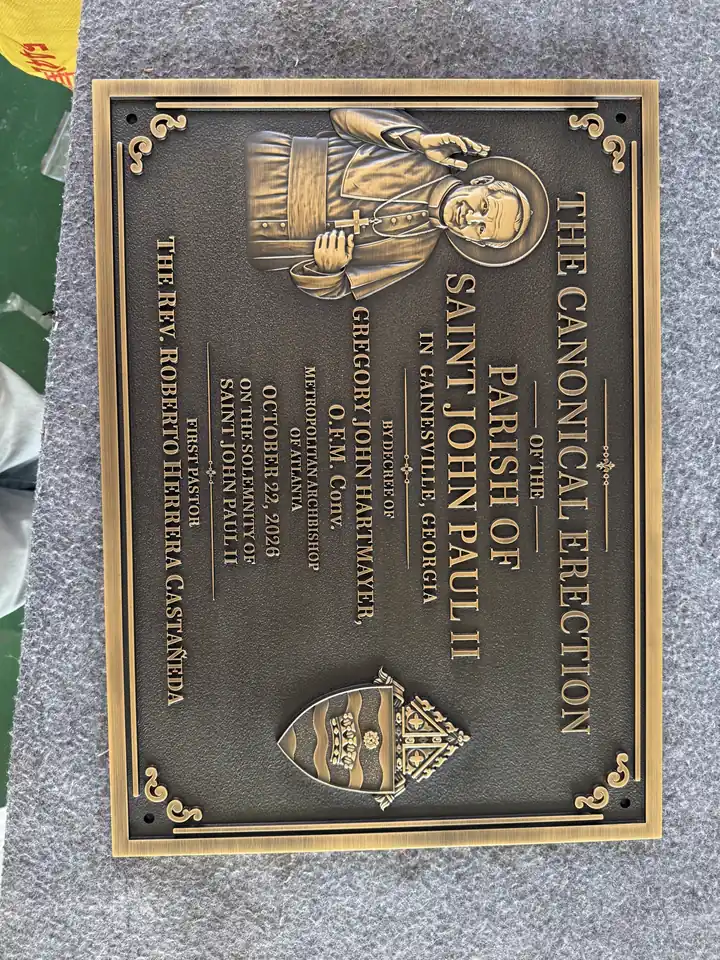
A custom solid copper plaque for a church, with a portrait, raised lettering and an ornamental border. See the finished piece and the customer feedback behind this recent project.
This recent AeroSignage order is a custom solid copper church plaque made for long-term commemorative display. The finished piece combines a portrait of Saint John Paul II, a coat of arms, raised lettering…
A sign schedule turns a hotel or apartment project from scattered inspiration images into a quoteable package. It should organize room numbers, wayfinding signs, restroom signs, exterior plaques, icons,…
Start with one sample, order a single replacement, or source a complete hotel signage package—our MOQ is always 1 piece. This guide covers sign schedules, finish approval, packing and international…
This planning checklist shows hotel owners, designers, procurement teams, and sign contractors how to turn renovation or new-build floor plans and location lists into a quote-ready signage package. It…
Choosing a custom hotel signage supplier means verifying manufacturing capability, not comparing catalog photos. Overseas buyers should confirm whether they are dealing with a manufacturer, trading company,…
Need custom hotel room number signs quoted quickly? Prepare room lists, dimensions, material thickness, finish references, mounting details, lighting needs, and artwork files before factory review.
Custom hotel room number signs are quoted per specification because material route, size, thickness, relief depth, finish complexity, lighting, quantity, packaging, and shipping all move the price. This…
A strong hotel room number signs RFQ should include the room schedule, product types, dimensions, material route, finish target, mounting surface, lighting requirement, sample plan, packaging rules,…
Hotel room number signs should be specified by material, thickness, finish, mounting surface, lighting need, and room schedule. CNC-carved aluminum, acrylic, ceramic panels, brass-effect finishes, aged…
Standard hotel room number signs are useful for fast selection and lower design friction, while custom signs are better when the project needs a unique finish, room schedule, plaque size, material…
Choose hotel room number sign dimensions from the room schedule, viewing distance, door or wall space, and approved accessibility requirements. Decorative mock-ups can start at 4 x 4 to 6 x 8 inches, but…
Compare lighted and non-lighted hotel room number signs by corridor effect, wiring, installation cost, maintenance, shipping, replacement needs, and compliance-sensitive use cases.
Compare tactile and decorative hotel room signs, then prepare a procurement checklist covering raised characters, braille, contrast, mounting, and local review before custom production.
Planning a hotel room numbering system? Start with the room schedule, floor logic, mounting surfaces, artwork package, replacement strategy, and floor-by-floor packing plan.
This design and specification checklist helps a boutique hotel turn its brand language, interiors, door conditions, and room list into one coherent sign system. It covers visual direction, room and…
Custom hotel room number signs are made through a sequence of specification review, artwork preparation, CNC toolpath planning, cutting or carving, surface finishing, assembly, checking, packing, and export…
CNC-carved aluminum with an aged brass finish can rival the visual texture of solid brass in many hotel and villa sign applications, especially when buyers need warm color, raised detail, dark background…
CNC-carved aluminum is often the better route for custom hotel room numbers, address plaques, and relief signs because it starts from a digital file instead of a fixed mold. Old sand-cast metal can still…
A production-ready signage file package should include editable vector geometry, exact dimensions, material thickness, relief or engraving notes, finish references, mounting details, quantity, and packaging…
Custom carved relief plaques and cast bronze plaques can both look premium, but they are built for different buying situations. CNC-carved relief is usually stronger for hotel rooms, villa addresses,…
CNC carved aluminum signs and cast bronze plaques can both look premium, but they solve different purchasing problems. CNC aluminum is usually stronger for custom room numbers, address plaques, and…
CNC relief carving turns flat material into architectural plaques with raised borders, recessed backgrounds, dimensional letters, textured fields, and aged finishes. The result depends on material…
Surface finish selection should start from the installation scene, not from a color name. Buyers should compare contrast, lighting, cleaning, indoor or outdoor exposure, brand mood, and whether raised…
Cast aluminum address plaques are strong for repeated standard designs, but CNC-carved aluminum is often the more flexible route for personalized house numbers, street names, phone numbers, and one-off…
Cast aluminum and CNC-carved address plaques mount differently on brick, stucco, siding, and stone. This guide compares mounting-hole, hidden-stud, and adhesive routes, explains wall-by-wall anchor and…
Brass, bronze, and cast aluminum address plaques differ mainly in patina behavior, weight, weathering, and cost structure. Solid brass and bronze offer authentic copper-alloy aging at roughly three times…
Villa signage is a first-impression architectural element, not a generic house number. This guide shows how to design coordinated villa number signs, entrance plaques, and wall-mounted address markers that…
Exterior address plaques for villas need to be readable from the expected viewing distance, durable in the installation environment, and matched to the wall, gate, or entrance material. A strong RFQ should…
Planning a custom signage project?
What should buyers prepare before requesting a quote?
For procurement teams evaluating AeroSignage Buyer Guides, this AeroSignage page is a production-screening reference, not a fixed catalog SKU. It explains the buyer context, sign family, material and finish variables, and factory-backed review points that affect quotation. A useful RFQ should include dimensions, quantity, installation location, mounting surface, artwork or reference photos, target finish, packaging needs, and delivery market. AeroSignage is the official international sales and service office for an affiliated signage manufacturing base, so overseas buyers can discuss specifications under the AeroSignage brand while CNC carving, surface treatment, assembly, and export coordination remain connected to real workshop capability. This helps hotel owners, designers, contractors, and purchasing teams compare style, budget, finish, and production route before they request a quote. When the page includes photos, catalog links, video, or proof notes, those assets should be used as references for specification review, not as automatic stock guarantees.
What evidence supports this page?
Product information for AeroSignage Buyer Guides comes from AeroSignage product close-ups, workshop photos, the public PDF catalog, finish and relief samples, and the local workshop video. Use these materials to compare construction, surface detail, available processes, and the inputs needed for quotation. Final dimensions, materials, finishes, mounting, availability, compliance documents, and engineering requirements are confirmed for the specific order in writing.
Useful resources for quotation review
These resources connect the guide with AeroSignage product references, workshop processes, and the files needed for an accurate quotation.