What size should a villa address plaque be?
There is no universal size. Decide by viewing distance, wall width, digit height, street-name length, and whether the sign must be read from a driveway, street, or close entrance view.
Exterior address plaques for villas need to be readable from the expected viewing distance, durable in the installation environment, and matched to the wall, gate, or entrance material. A strong RFQ should specify size, material route, finish, weather exposure, mounting surface, hardware, and whether numbers or letters should be modular.
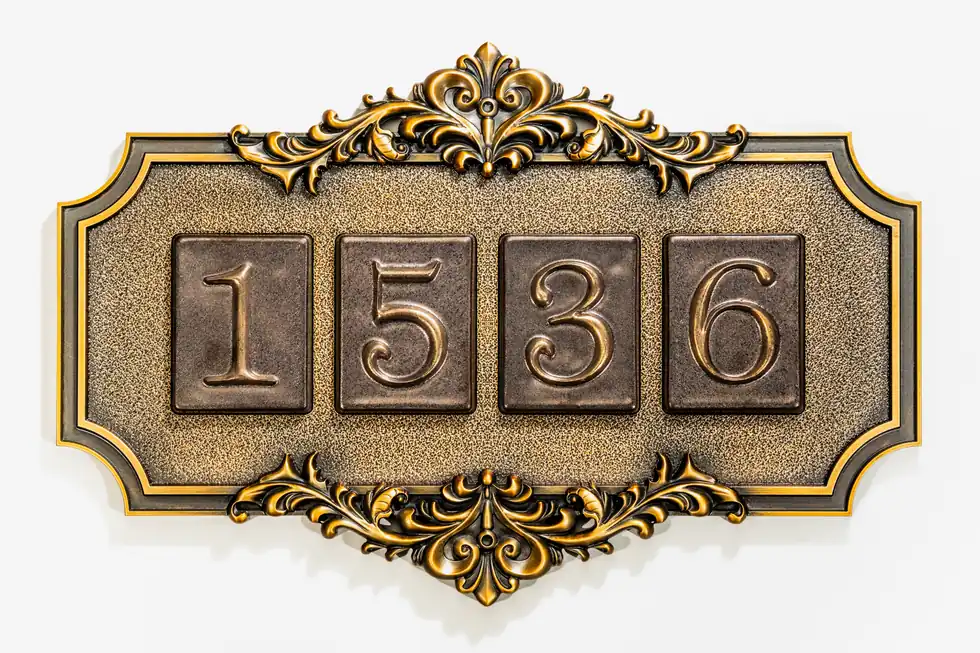
Review weather exposure, wall material, viewing distance, finish durability, and mounting hardware.
Product page Personalized address plaquesPlan custom numbers, street names, modular digits, and address-specific production requirements.
RFQ Send villa address plaque detailsSubmit address text, wall photos, viewing distance, finish reference, and mounting method.
A villa address plaque is not only a house number. It affects the first impression of the property, helps guests and delivery drivers find the entrance, and must survive exterior exposure. The design should match the architecture, wall texture, gate material, and lighting around the entrance.
Buyers often start from a cast aluminum reference photo. That is useful for style, but the production route should still be chosen by quantity, customization, material thickness, finish target, mounting surface, and replacement needs.
A small plaque may look elegant in a close-up photo but fail outdoors if the number is viewed from a driveway or street. The RFQ should state the viewing distance, wall width, expected plate size, digit height, street-name length, and whether the sign needs to be read from a moving vehicle.
Long street names and four-digit addresses need more layout space than a simple two-digit villa number. If the plaque includes a family name, estate name, logo, or decorative border, the buyer should confirm which element is most important to read first.
Exterior plaques may face rain, sun, irrigation, salt air, dust, cleaning chemicals, or strong temperature changes. CNC-carved aluminum, brass-effect finishes, aged copper, black-gold contrast, ceramic or stone-look inserts, and UV details can all be reviewed, but the right route depends on the exact exposure.
The buyer should avoid vague finish words such as bronze or gold. A better RFQ states whether the target is red antique copper, yellow antique copper, blue-green patina, polished brass effect, oxidized dark background, painted border, or UV printed detail.
Stone, brick, stucco, metal gates, wood, and painted walls behave differently. Some surfaces need anchors and pre-drilled holes. Some need hidden studs. Some need a back plate. Some need sealing around holes. Relying only on adhesive is risky for heavy, textured, or exterior plaques.
Before production, the buyer should send photos of the mounting surface and state whether holes, screws, hidden studs, template paper, standoffs, or adhesive support are preferred. This allows the plaque back structure and packing to match the job site.
For one villa, an integrated plaque may be fine. For a program where each customer has a different address, modular raised numbers or separately produced number components can make customization easier. This is especially useful when the base shape and border stay similar but the digits and street name change.
The manufacturer should confirm whether the numbers should be removable, separately bonded, slotted into a CNC-carved base, or fully integrated. The right choice depends on thickness, transport risk, exterior exposure, and the buyer’s replacement plan.
| RFQ Item | What to Specify | Why It Matters |
|---|---|---|
| Viewing distance | Street, driveway, gate, porch, or close-viewing distance | Controls plate size, digit height, contrast, and layout |
| Wall or gate material | Stone, brick, stucco, wood, metal gate, painted wall, or exterior panel | Controls mounting hardware and back structure |
| Weather exposure | Rain, sun, salt air, irrigation, cleaning, shade, or covered porch | Controls finish, coating, and maintenance expectation |
| Finish target | Antique copper, brass effect, black-gold, oxidized background, painted color, UV detail | Prevents vague bronze or gold language |
| Number logic | Integrated numbers, modular raised digits, street name, logo, or replaceable components | Controls customization and future replacement |
Supplier-specific statements use clearly identified first-party AeroSignage materials.
Local codes, accessibility requirements, engineering details, and order-specific claims must be confirmed for the destination market before production.
There is no universal size. Decide by viewing distance, wall width, digit height, street-name length, and whether the sign must be read from a driveway, street, or close entrance view.
Yes, when material thickness, finish, coating, mounting, and exposure are reviewed. CNC aluminum is useful for custom numbers, raised details, and brass or aged-metal visual effects.
Usually with mechanical fixing, pre-drilled holes, anchors, studs, a back plate, or sealed fasteners depending on the surface. The buyer should send wall photos before production.
They can be possible if the fixing method, material thickness, finish protection, and transport plan are suitable. The manufacturer should confirm whether numbers are removable, bonded, slotted, or integrated.
Include address text, size, quantity, wall or gate photos, viewing distance, material preference, finish reference, weather exposure, mounting method, and artwork or logo files.
These resources connect the guide with AeroSignage product references, workshop processes, and the files needed for an accurate quotation.
A compact PDF catalog for sharing product families, finish directions, and RFQ preparation notes with hotel, apartment, villa, and commercial buyers.
Room schedule CSV Download room schedule template for hotel room number signsA lightweight CSV template for room numbers, floors, quantities, dimensions, finishes, mounting, lighting, and packing labels.
Sign schedule CSV Download sign schedule checklist for hotel and architectural projectsA project-wide checklist for room signs, wayfinding plates, restroom signs, exterior plaques, and zone-by-zone approval notes.
RFQ template CSV Download custom signage RFQ templateA compact RFQ template for buyers who want to send size, material, finish, quantity, artwork, installation, and delivery details by email or WhatsApp.
YouTube channel YouTube channel: AeroSignage product and workshop videosOfficial AeroSignage video channel for product and workshop clips that support buyer review before a custom signage quotation.
Factory proof Factory proof: CNC relief manufacturingReview the workshop logic behind CNC carving, surface treatment, assembly, and export quotation support.
Product evidence Product and workshop evidenceReview finished samples, surface details, workshop media, and the information to prepare before requesting a quote.