CNC Relief Carving for Architectural Plaques: Materials, Depth, and Finish Options
Written by: AeroSignage GlobalReviewed by: AeroSignage Editorial TeamPublished:Updated: No later material update recorded
CNC relief carving turns flat material into architectural plaques with raised borders, recessed backgrounds, dimensional letters, textured fields, and aged finishes. The result depends on material thickness, carving depth, toolpath files, hand finishing, and how clearly the buyer defines the installation and finish target before production.
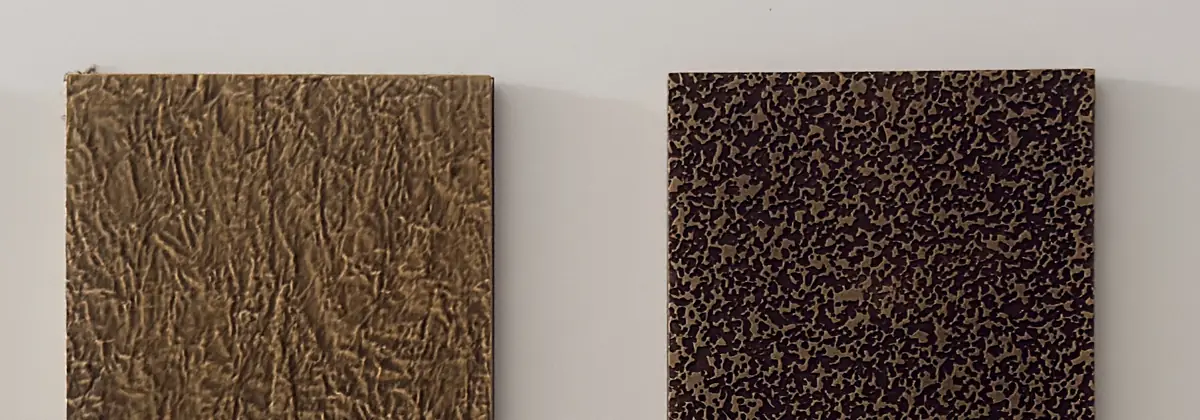
Relief sample boards help buyers define material, depth, texture, raised letters, and surface finish before quotation.
1. CNC relief starts as a flat plate, not a molded object
A common misunderstanding is that every raised plaque must be cast. In CNC relief carving, the material begins flat. The machine removes material from above with vertical milling paths, leaving selected areas raised and cutting other areas down into background texture, recessed panels, grooves, or decorative border movement. The visual depth is created by toolpath planning and finishing, not by pouring metal into a mold.
This matters for buyers because the design file becomes part of the product. A border is not just a line in a picture; it needs a path, depth, radius, and edge treatment. A raised number is not only a font choice; it needs height, thickness, polish level, attachment method, and enough spacing to survive machining and finishing.
2. Choose material by installation, not only by appearance
Aluminum is the practical base for many carved relief plaques because it can support CNC detail, aged finishes, polished highlights, outdoor review, and lower weight than solid brass or bronze. Acrylic can work for layered or illuminated details. Stone-look panels, ceramic inserts, resin components, and wood-style surfaces can be combined when the buyer wants a mixed-material plaque.
The installation decides what is safe. A heavy exterior wall plaque needs different thickness, mounting, and packaging from a suite door plaque. A restaurant private-room sign can accept richer texture at close viewing distance, while a villa address sign must remain readable from farther away. The RFQ should name the surface: wood door, painted wall, stone, brick, stucco, metal, glass, gate, or exterior column.
3. Relief depth controls shadow, cost, and risk
Deeper relief creates stronger shadow and a more sculptural feeling, but it also increases machine time, finishing work, and risk around thin strokes. Very shallow relief can look elegant when the plaque is close to eye level, but it may disappear under weak hallway lighting or on a busy textured wall. The buyer should not ask only for deep or premium. A better request gives a target: raised border, recessed background, polished number, aged texture, or 3D letter effect.
For hotel and villa signs, depth planning should consider viewing distance. A room door sign seen from one meter away can use finer detail. An exterior address plaque seen from a driveway needs simpler shapes, stronger contrast, and a clear number. A boutique interior plaque can use ornate border carving because the viewer is close enough to appreciate the detail.
4. Toolpath files decide whether the idea is machinable
A beautiful rendering is not always a production file. CNC relief requires clean vector edges, separated raised and recessed zones, clear notes about carved texture, and enough material around small details. If a buyer sends only a screenshot, the production team can understand the style but cannot reliably quote the machine path without assumptions.
Useful files include AI, PDF, SVG, CDR, DWG, or a structured ZIP package with reference images. If the design includes complex ornaments, the buyer should mark which areas are raised, which are recessed, which should be polished, which should be painted, and which should remain a textured background. That extra marking can save several rounds of quotation confusion.
5. Finish options change the final look more than buyers expect
The same carved plaque can look traditional, modern, vintage, or luxury depending on finishing. Red antique copper gives warmth and age. Yellow antique copper reads closer to brass or classic bronze. Blue-green antique copper creates a patinated look. Black-gold creates high contrast for hotel doors and private rooms. Oxidized dark backgrounds make polished numbers stand out.
Finishing also decides what should be protected during packing. Raised letters, polished number faces, corner ornaments, and high border points are the first parts to rub in transit. A production-ready RFQ should mention whether the buyer expects individual wrapping, room labels, foam protection, or packaging by floor, suite, address, or sign type.
6. A good RFQ turns design taste into production language
A vague request such as 'make it like cast bronze' can lead to a quote, but it will not be a safe quote. A stronger request says: 300 by 180 mm plaque, 5 mm aluminum base, raised border, recessed textured background, separate raised numbers, black-gold finish, concealed studs, indoor corridor use, sample first, then 80 pieces packed by floor.
That level of detail does not make the buyer responsible for engineering every step. It gives the manufacturer enough information to choose a realistic material route, carving depth, finish sequence, and sample plan. The result is faster review, fewer assumptions, and a better chance that the first sample looks like the buyer's target.
Local codes, accessibility requirements, engineering details, and order-specific claims must be confirmed for the destination market before production.
FAQ
What material is best for CNC relief plaques?
Aluminum is often the practical first choice because it supports CNC detail, aged finishes, lower weight, and many indoor or reviewed outdoor uses. The final choice depends on size, thickness, mounting, and finish.
How deep should the relief be?
There is no universal depth. Close-viewing interior plaques can use finer relief, while exterior address plaques need stronger number contrast and simpler detail. Send a reference and state the viewing distance.
Can a factory make the CNC file from a photo?
A photo can start the discussion, but production needs editable artwork or a revised file that separates raised, recessed, polished, painted, UV, and texture zones.
Can CNC relief be used outdoors?
It can be reviewed for outdoor use when material, finish, clear coat, mounting, wall type, drainage, and exposure are specified. Exterior projects should not be priced only from a front-view picture.
What is the fastest way to get an accurate quote?
Send size, quantity, material preference, thickness, finish reference, artwork file, relief depth target, installation surface, and whether a sample is required before bulk production.
Explore custom carved relief plaque routes
Start from the product page, then use these guides to explore whether CNC relief fits the project, how to specify material and depth, and how to describe antique copper or brass-effect finishes before sending artwork.