Church Dedication Plaque Wording: What to Say and What to Leave Out
Name what is being dedicated, say whom the plaque honors, and label the date so a future reader can understand it. A building dedication, a room named for someone and a gift made in someone's memory need different wording. Start with the closest draft below, then remove any line that does not belong to your occasion.
Decide what the main line is naming
Write a plain sentence before trying to write an inscription: this plaque marks the dedication of our new chapel; this room honors a former pastor; this garden was given in memory of a parishioner. That sentence tells you what belongs at the center of the finished plaque. It also reveals when two different occasions have been mixed together.
A building plaque can lead with the church and building names. A personal memorial usually needs the person's name to lead. A donor acknowledgment needs to say what the gift made possible. There is no advantage in making all three sound like the same formal announcement.
You can include a church emblem, a verse, leadership names and a historical note, but including something is different from giving it top billing. If the committee wants every item to be the headline, settle the purpose before changing the lettering.
Four wording drafts to adapt
These are original starting drafts, not inscriptions from completed orders. Replace the bracketed text and omit lines that do not fit. Line breaks show the relationship between the ideas; they are not a fixed layout or a required number of lines.
For a formal religious act, use the event name approved by the church. Do not substitute dedication, consecration, blessing or another term merely because it fits the space. The first draft below is for a general building or sanctuary dedication.
A date needs to say what happened
A year beneath a name can mean several things: the year the person died, the year a room opened, or the year the plaque was dedicated. The people arranging the plaque may know which one it is. A visitor reading it later may not. Add a short label such as Dedicated, Opened or Years of service when the meaning would otherwise be uncertain.
A church can have a founding date, a building-completion date and a first-service date. They do not have to occupy three equally prominent lines. If the plaque marks the new building's dedication, give that occasion the main date. Keep the founding year only if the congregation's longer history is part of the message.
If two dates are necessary, name both events instead of placing an unexplained range beneath the church name. Use the approved dates even when the plaque is made before or after the ceremony. The manufacturing date is not automatically the date being commemorated.
What does each line need to do?
| Part of the inscription | Keep | Reconsider |
|---|---|---|
| Main subject | The building, room, gift or person the plaque is about. | Several competing headlines for different occasions. |
| Names | The approved public name and a clear relationship to the dedication. | Unexplained lists that mix honorees, donors and organizers. |
| Dates | The date of the named event, labeled when needed. | A year or date range whose meaning depends on being told the story. |
| Supporting words | A specific contribution, chosen verse or brief historical context. | Repeated thanks, generic praise or an unrelated campaign message. |
Keep the person honored separate from the donor
A window can be given by one family in memory of someone else. If both names appear without a connecting phrase, the relationship can be lost. In draft three, Given in memory of identifies the person remembered; By identifies the donor. Neither name needs an elaborate sentence to explain its role.
For an acknowledgment of a living person's service, say what the service was. A short reference to teaching, restoration work or years of ministry is more specific than several interchangeable compliments. Use the person's preferred public name and agreed title, rather than automatically copying a database entry or an old program.
A dedication plaque also does not have to become a fundraising appeal. If the purpose is to record a completed gift, preserve that acknowledgment. A current campaign message can sit elsewhere, where it can change without rewriting the permanent tribute.
Shorten the inscription without deleting its purpose
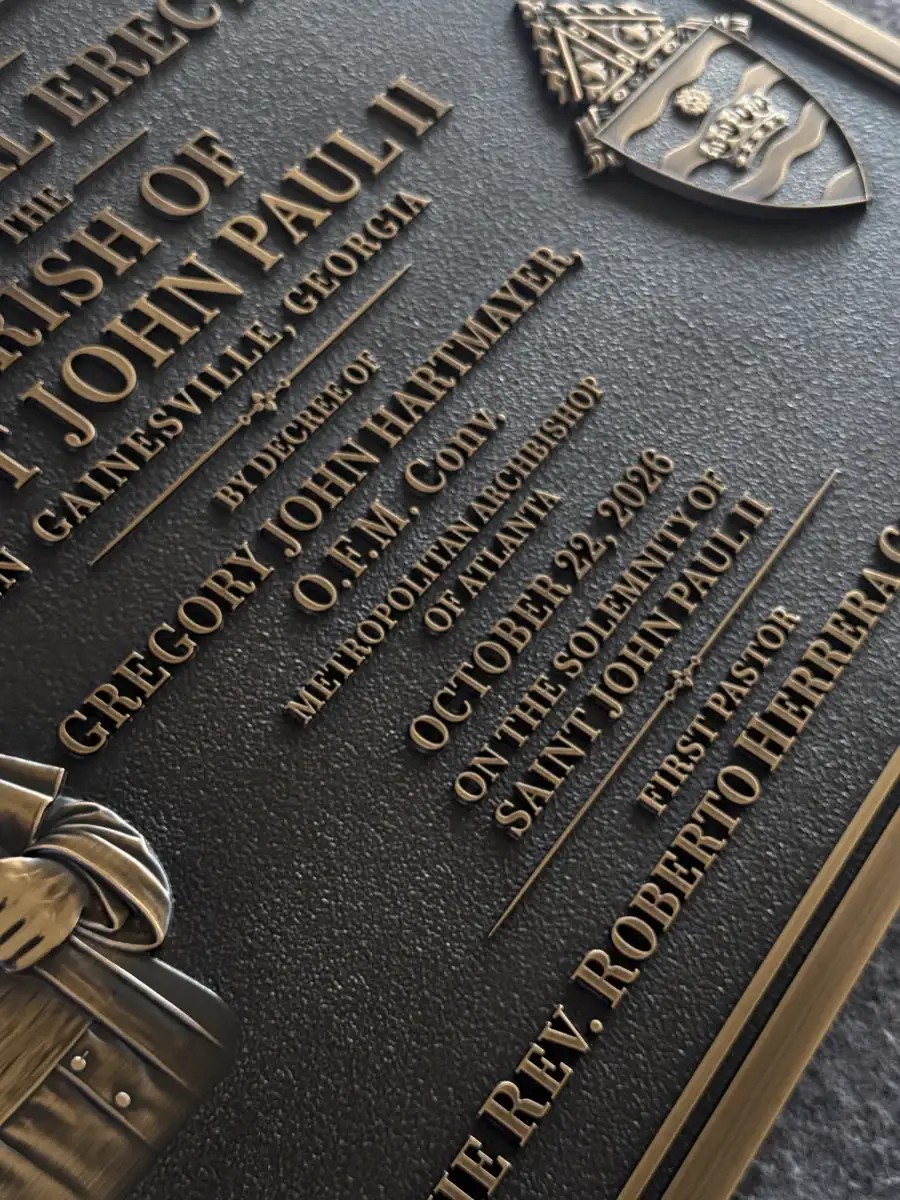
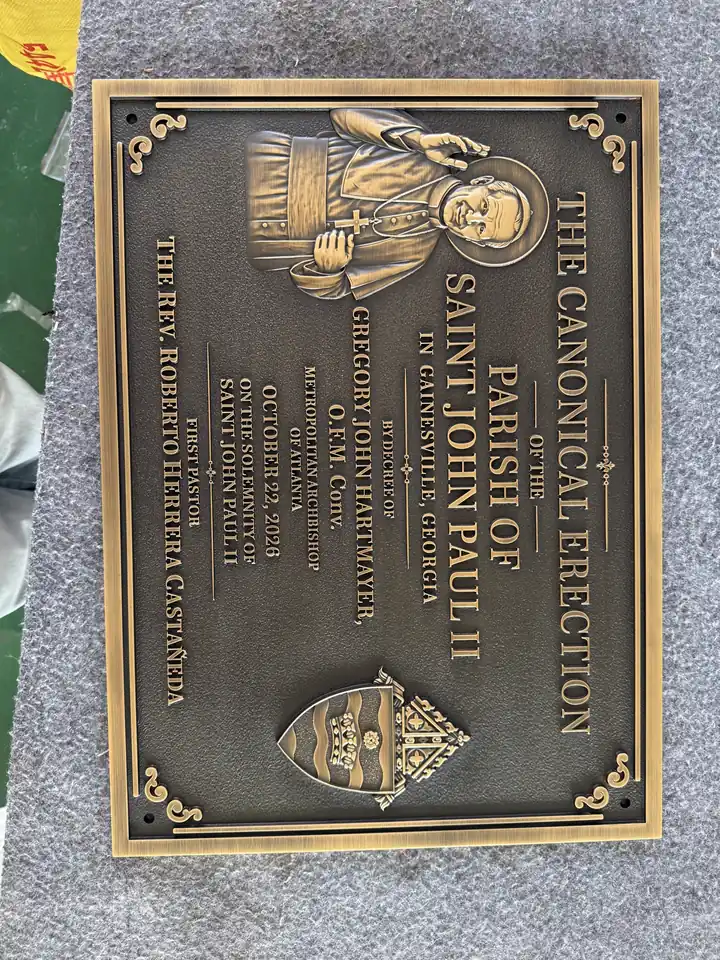
On the solid copper church plaque shown here, the event title and parish name establish the subject. The portrait, central inscription and coat of arms have their own places inside the border. The smaller lines carry supporting names, titles and the date. They are present without all becoming the main title.
That is the useful editing question for your own wording: which line tells the reader what this plaque is for? Protect that line. Remove a repeated statement of thanks or a second sentence saying the same thing before shortening the person's name or deleting the event label.
A complete history may belong in a booklet or church record. A longer inscription can still be appropriate when the story itself is the purpose, but it needs a layout designed for that reading. Do not keep adding sentences to a short dedication simply because each one sounds worthy on its own.
Key takeaways
- Choose the dedication's subject before choosing a formal tone.
- State what the date records and distinguish the honoree from the donor.
- Edit repetition first; preserve the names, event and relationships that give the plaque meaning.
FAQ
What should a church dedication plaque include?
Start with the subject of the dedication, the church or person concerned, and the relevant date. Add a contribution, approved verse or supporting names only when they help explain the occasion. A building dedication and a personal memorial need different priorities.
Which date should go on the plaque?
Use the date of the event the plaque records. If it is a dedication, label that date accordingly. Founding dates, service periods and life dates can also be included when relevant, but should not be left as an unexplained number or range.
How do we name a donor when the gift remembers someone else?
Give each name a clear role. A line identifying the person remembered can be followed by a separate donor line. Check the preferred name of each person or family before the final text is approved.
Can I ask about just one custom church plaque?
Yes. AeroSignage accepts enquiries for a single custom plaque. Send the proposed wording and a preferred visual reference so the material, artwork, finish and order-specific details can be reviewed together.
Sources and review scope
Supplier-specific statements use clearly identified first-party AeroSignage materials.
- AeroSignage catalog and workshop media (first-party)
- AeroSignage manufacturing capability documentation (first-party)
Local codes, accessibility requirements, engineering details, and order-specific claims must be confirmed for the destination market before production.
Buyer path for this topic
Approve the words before polishing the presentation
Read the inscription once for meaning and once for literal accuracy. On the first pass, ask whether someone outside the organizing group could identify the occasion and the people involved. On the second, check every name, title, date and line of a quotation against the approved text.
If you include scripture, agree on the passage and the exact translation before laying it out. A remembered version of a verse may differ from the wording the church uses. When only a short excerpt is wanted, have that excerpt approved rather than silently cutting words to fit a favorite design.
Keep one final wording document for the people approving the plaque. A spelling correction in an email should also reach that document; otherwise two apparently approved versions can remain in circulation. Once the wording is settled, send it with your preferred plaque reference to discuss a single custom piece or a related group of plaques with AeroSignage.