Coastal Resort Signs: Why We Proposed Aluminum
For a US coastal resort enquiry, we proposed alloy-aluminum sign faces while keeping the desired antique-metal appearance, green backgrounds and raised lettering. The decision brought fabrication, finishing, international shipping and local installation into the same discussion. This is how we compare that route with real wood and HDU, and where an aluminum recommendation needs a more specific finish plan.
Preserve the design before choosing the substrate
The resort's original brief allowed several material routes: bronze or brass-style plaques, plus larger signs in routed HDU, cedar or an equivalent exterior material. Raised letters, a green field and a traditional coastal character held the family together. The material names were a starting point for discussion.
Our revised quotation proposed fabricated alloy-aluminum faces across the sign family. It retained the antique yellow-bronze appearance, horizontal brushed effect, green recessed areas and raised lettering and borders. That gave us a consistent material route for different sign types while preserving the features that made the design recognizable.
The useful lesson is to identify which parts of the appearance are essential. A warm metallic color does not require a solid-bronze body. A carved border does not require a wooden panel. If natural timber itself is part of the intended experience, however, that is a material requirement worth keeping. This enquiry reached a proposed material alternative; it is not a completed installation or a measured savings case.
Color, grain and relief are different finish decisions
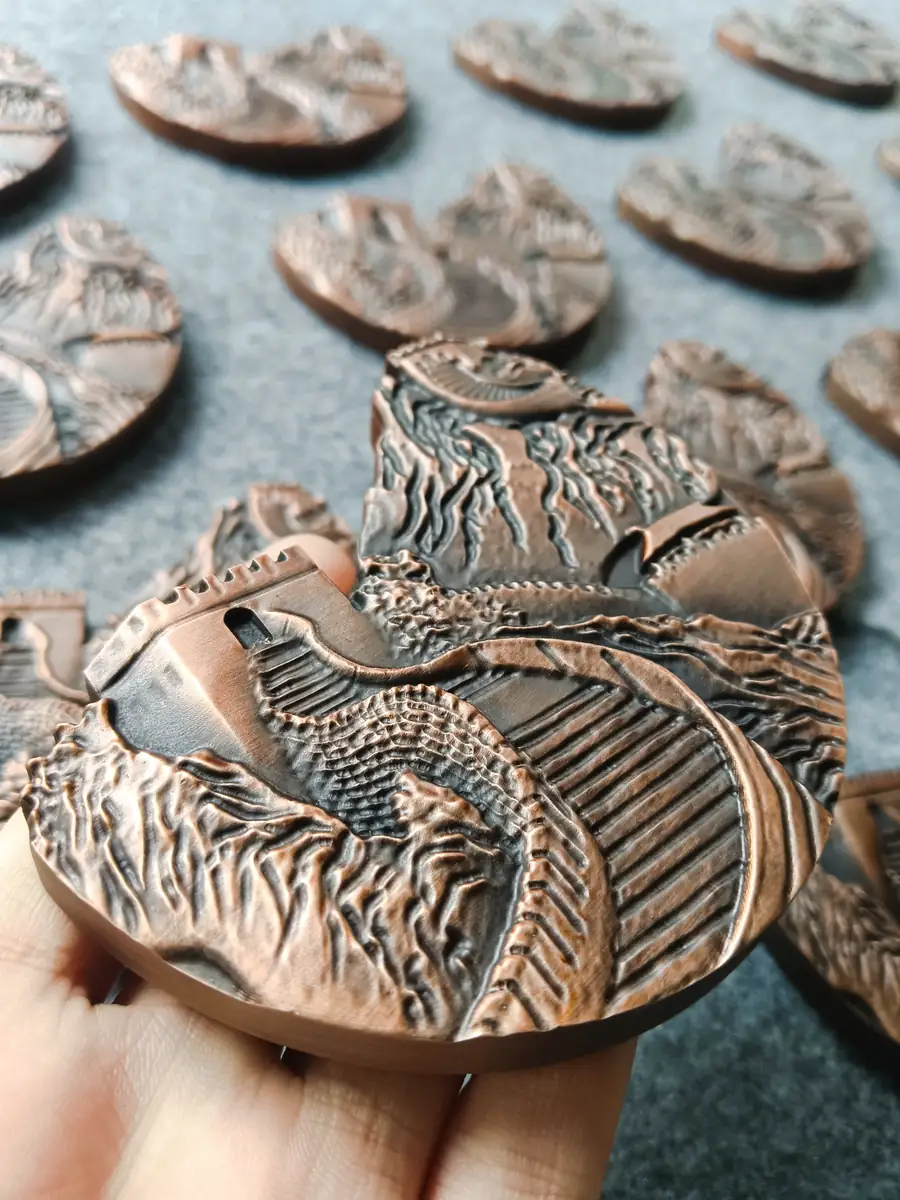
Aluminum gives us room to work with the surface. CNC carving creates the raised and recessed shapes; brushing, polishing, painted color and aged-metal effects develop their appearance. The photographed sign below combines broad copper-colored letter faces with a dark textured field. The original workshop record identifies it as carved aluminum.
Use the flat finish references below to compare fine horizontal brushing, a deep-green painted surface and an antique textured effect. They make the differences in grain, color and surface character easier to judge before choosing a process and approving a sample.
Anodizing is a particular surface process, not a general name for every antique or wood-look finish. Factory descriptions such as oxidation effect can also describe a decorative treatment. Ask us to identify the actual process proposed for your sample. A color change, a printed pattern and physical carved texture should be specified separately.

Compare aluminum surface finishes.
Compare the color, grain and texture of different aluminum finishes.
A warm metallic appearance
A warm tone is a finish choice. It does not make the aluminum body solid bronze.
A coordinated painted color
The coating system and an approved sample matter as much as the color reference.
An antique surface character
Tonal variation creates an aged appearance. Agree the application process and texture with a physical sample.
Surface effects are for comparison. Approve the final texture and gloss with a physical sample.
If you want wood grain, specify the grain
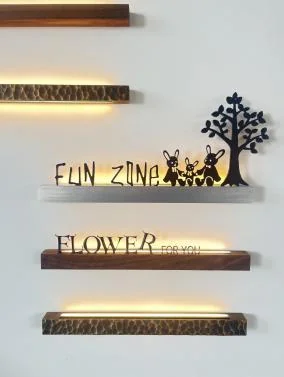
A brown surface and a convincing wood pattern are different requests. If the reference depends on grain direction, knots or a particular timber character, say which features matter. Our indoor catalog includes walnut-look finish options on carved-aluminum bar signs; that demonstrates an appearance option, not an approved coastal finish specification.
Specialist wood-look metal systems can combine a base coating with film transfer or sublimation. Interpon describes that route for its decorative aluminum finishes. It is a separate process from ordinary anodizing or applying one paint color, and it should be sampled and quoted as such.
HDU also deserves a fair comparison. It is a polyurethane sign board with established carving and simulated-grain methods, rather than a synonym for every plastic or wood composite. Precision Board's manufacturer describes efficient woodgrain techniques. For a deep wood-style carving, HDU may be an appropriate choice. Compare the actual grain-making, preparation, painting and reinforcement required by the design.
Check the sign and the shipping crate separately
Natural wood can add questions to an overseas order: what species is used, where it was harvested, how the product is classified and which import requirements apply. For US imports, a Lacey Act declaration depends on the product's plant content, tariff classification and entry conditions. A finished wooden sign is not automatically subject to every rule that applies to raw wood.
A genuinely wood-free aluminum sign avoids the plant-material declaration issue for its body. Ordinary customs requirements still apply. A sign containing wood inserts or other plant-derived components needs its own assessment; changing only the main panel does not settle the whole product.
Packaging is a separate check. Regulated solid-wood crates and pallets entering the United States require the appropriate ISPM 15 treatment and marking. That can still apply when the item inside is aluminum. Plywood packaging with solid-wood battens should not be treated as entirely processed wood. Confirm the product and packaging descriptions with the importer or broker before dispatch.
Check the sign and its packing separately.
A change of sign material does not automatically change the requirements for its crate or pallet.
The product
Identify the actual wood product
Species, origin, processing and destination can affect the checks required. Do not treat every wooden sign as the same import.
Identify the actual composition
HDU foam and wood-containing composites are different materials. Declare what the product actually contains.
Specify the metal sign
Confirm the material, finish, description and shipping documents. Aluminum does not remove other import obligations.
The packing
If solid-wood crates, pallets or blocking are used, check the applicable wood-packaging requirements separately.
Confirm product and packing details with your importer before shipment.
Choose the material route by what the design needs
| Route | A reason to consider it | What the quotation must resolve |
|---|---|---|
| Natural timber | The real timber and its natural grain are part of the intended character. | Species, fabrication and finish, relevant import checks, packing and outdoor care. |
| Carved HDU | A carved or wood-style form suits an established sign-board process. | Actual grain and paint work, support requirements and the complete finished cost. |
| CNC or fabricated aluminum | Raised detail, metallic effects and a coordinated painted palette fit a metal-panel route. | Alloy, construction, finishing, coastal exposure and what is supplied for local installation. |
| Wood-look aluminum | A wood-pattern appearance is wanted on a metal body. | The specific pattern-making process, sample, exterior suitability and separate finish cost. |
Compare the finished build and the delivered scope
For our CNC production route, aluminum was a practical material to quote for this sign family. It could carry both the relief and the coordinated color scheme. Using one material route across several designs gave us a useful way to control the fabrication plan. That is why we recommend pricing an aluminum version early when a resort wants raised detail and a consistent palette.
A quote should account for the substrate, carving or fabrication, surface preparation, decorative finish, separately made parts, packing and freight. A detailed woodgrain effect can add work; a straightforward HDU design can also be efficient. There is no reliable rule that every plastic or timber sign costs more than aluminum.
The resort proposal made another useful distinction: decorative sign faces and their panel-level connections would be supplied from China, while granite posts, main supports, foundations and site installation would be handled locally. There is little value in simplifying a sign face if the quotation still leaves the buyer guessing who supplies the heavy support structure.
Port freight, destination charges, clearance and inland delivery were separate parts of that discussion. Compare the complete delivered scope and the same finish target. A lower factory figure only helps if the remaining work and delivery charges have also been accounted for.
For a coastal site, specify a finish system
Aluminum is a useful outdoor sign material, but salt exposure still matters. The specification should cover the alloy and construction, surface preparation, the selected finish, compatible mounting details and care. An attractive sample establishes the appearance to approve; it does not establish years of coastal service.
AkzoNobel's architectural coating guidance treats salinity, preparation and cleaning as important parts of finish performance. The Aluminum Anodizers Council likewise distinguishes anodizing quality, coloring and maintenance. A suitable coated or anodized aluminum system can be considered for exterior use, but the actual route must match the location.
For the resort proposal, the final alloy, coating build-up and samples remained subject to approval. We would use the same approach for a new coastal brief: identify the exposure, agree the finish and its care requirements, and state any warranty in the quotation. No universal corrosion-free or fade-free period follows from the word aluminum.
Coastal durability comes from the whole specification.
The aluminum body is one part of a system: preparation, finish, fixings and care also matter.
Specify an exterior color system
Ask for a finish suited to the location. Color retention and metal corrosion are separate questions.
Protect details as well as faces
Review edges, drainage and contact with dissimilar metals. Aluminum is corrosion-resistant, not corrosion-proof.
Make maintenance practical
Agree a cleaning method with the finish supplier. Remove salt deposits without abrasive damage to the coating.
Surface references illustrate exposure and care. Select the final finish for the actual conditions at your site.
Key takeaways
- Preserve the important visual features first, then compare the material routes that can deliver them.
- Assess wood in the sign and wood in its packaging separately; an aluminum panel does not remove every import or packing obligation.
- Compare the complete build and delivered scope, and specify coastal protection and care for the actual finish.
FAQ
Can aluminum signs have a traditional bronze or brass appearance?
Yes. Our real aluminum examples and the resort quotation show aged-metal color, brushed effects and contrasting recessed areas. Specify the aluminum body and the decorative finish separately; a bronze-like appearance is different from a solid-bronze requirement.
Do all wooden signs need fumigation before US import?
That is not a safe general rule. Requirements for a wooden product depend on its composition and classification. Regulated solid-wood packaging has a separate ISPM 15 treatment and marking requirement, even when it carries aluminum signs. Confirm the actual shipment with the importer or broker.
Is a faux-wood plastic sign always more expensive?
No. HDU and other plastics are different products, and HDU has established carving and grain-making methods. Compare the specific design's machining, texture, painting, reinforcement and delivery requirements with the proposed aluminum build.
Can anodizing alone produce realistic woodgrain?
Do not assume so. Woodgrain is a pattern requirement that may need a dedicated decorative process, such as transfer over a suitable coating. Agree the process and sample; our indoor walnut-look catalog option does not establish an outdoor coastal specification.
Is aluminum maintenance-free beside the sea?
No. Alloy, surface preparation, finish, mounting and removal of salt deposits all belong in the specification. Any durability or color-retention warranty must apply to the selected product and exposure, rather than to aluminum in general.
Sources and review scope
Supplier-specific statements use clearly identified first-party AeroSignage materials.
- AeroSignage catalog and workshop media (first-party)
- AeroSignage manufacturing capability documentation (first-party)
Local codes, accessibility requirements, engineering details, and order-specific claims must be confirmed for the destination market before production.
Buyer path for this topic
Give the supplier a visual target and a delivery brief
Send the reference appearance, wording, approximate dimensions, quantity, installation setting and destination. Mark what must be preserved: the actual timber, the woodgrain appearance, the metallic tone, the raised lettering or the overall shape. Those priorities tell us where an aluminum alternative is useful and where it would change the brief too much.
We can then compare a CNC aluminum proposal with the original material route, explaining the finish, included hardware, packing and local work. The aim is a sign package whose appearance, manufacturing plan and delivery responsibilities make sense together.