Can CNC-Carved Aged-Brass Aluminum Plaques Rival Solid Brass?
Written by: AeroSignage GlobalReviewed by: AeroSignage Editorial TeamPublished:Updated: No later material update recorded
CNC-carved aluminum with an aged brass finish can rival the visual texture of solid brass in many hotel and villa sign applications, especially when buyers need warm color, raised detail, dark background contrast, and repeatable room numbers. It is not the same material as brass, but it can deliver the look more flexibly across custom schedules.
Quick answer for buyers
CNC-carved aluminum with an aged brass finish can rival the visual texture of solid brass in many hotel and villa sign applications, especially when buyers need warm color, raised detail, dark background contrast, and repeatable room numbers. It is not the same material as brass, but it can deliver the look more flexibly across custom schedules. For a production-ready AeroSignage RFQ, buyers should connect the guide topic to drawings, dimensions, material expectations, finish references, quantity, installation surface, and the intended commercial space. AeroSignage reviews these details through its official international sales and service office before factory-backed quotation.
How to use this material comparison
Use this guide when the design says brass but the project also needs many different numbers, lighter packing, or controlled cost. It separates the visual goal from the material requirement: choose aged-brass aluminum for brass-like appearance and CNC flexibility; choose solid brass when weight, touch, natural patina, or specification language requires real brass.
Photo evidence used here
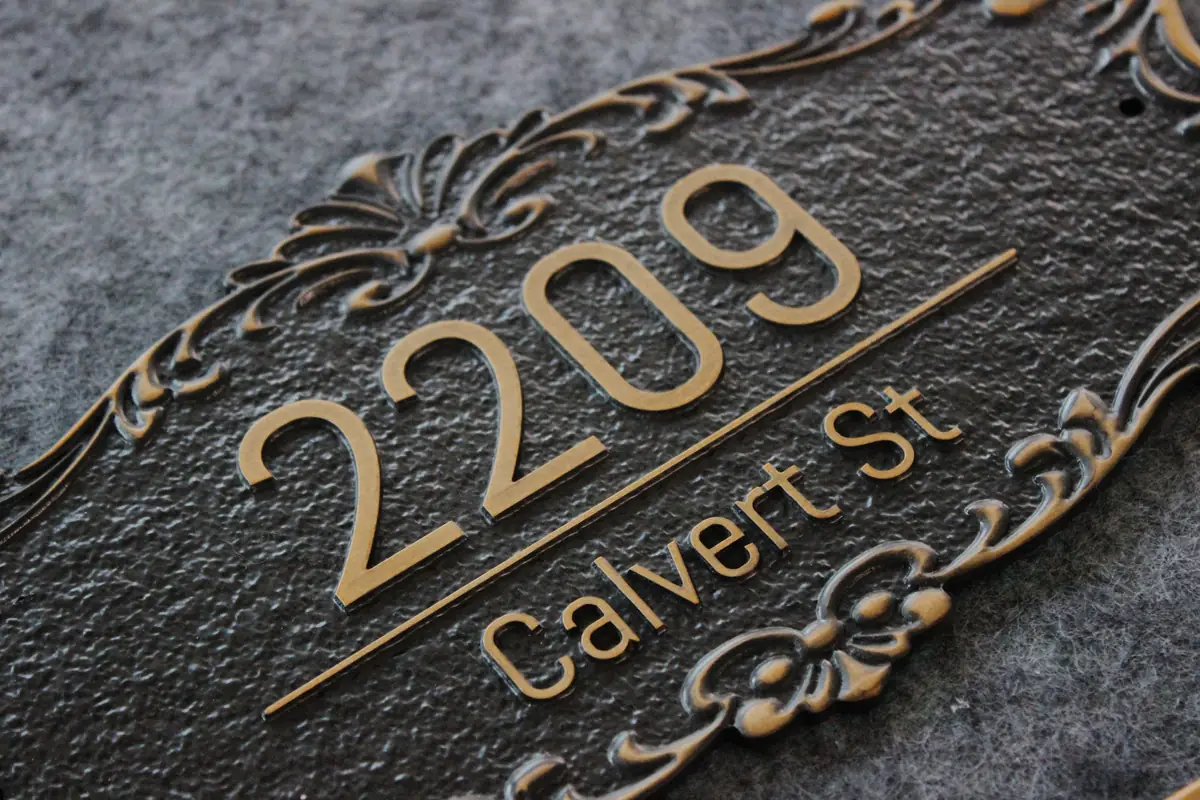
The close-up plaque photo is used to show visual texture, dark background contrast, raised number edges, and aged brass highlights. It should not be read as a claim that aluminum and solid brass are identical materials; it supports a practical visual comparison for hotel, villa, and interior signage buyers.
Aged-brass aluminum can rival the visual warmth of solid brass when raised details, dark texture, and polished highlights are controlled.
1. Separate visual texture from material authenticity
Many buyers say brass when they really mean a warm aged-metal look. They want golden highlights, darker low areas, carved depth, and a premium surface that reads well on a hotel door or villa wall. For that visual goal, CNC-carved aluminum with aged brass finishing can be a strong and practical route.
Solid brass is different. It has its own weight, touch, machining behavior, and natural aging. It is still the right choice when the specification requires true brass as a material. But if the buyer mainly wants the visual effect of brass across many changing room numbers, a carved aluminum base with a controlled aged brass finish can often give a comparable impression at lower weight and with more flexible customization.
2. Why the aged brass effect works on carved aluminum
The look does not come from color alone. It comes from layers of effect: raised numerals, recessed background, polished high points, darker texture in the low areas, softened edges, and controlled aging around borders or ornaments. When those details are present, the eye reads depth and metal value before it asks whether the whole body is solid brass.
CNC carving helps because it can create the geometry that the finish needs. A flat panel painted gold looks weak. A carved plaque with raised numbers, a textured dark field, polished brass-color highlights, and aged edges has shadow, contrast, and close-up detail. That is why the process can work well for boutique hotel room numbers, villa address plaques, club room signs, and decorative interior plaques.
3. Where solid brass still wins
Solid brass still wins when the buyer values material authenticity more than production flexibility. A heritage entrance plaque, luxury suite marker, yacht club sign, or single ceremonial plaque may justify real brass because weight, touch, and long-term patina are part of the design story.
The tradeoff is that solid brass can be heavier, more expensive, and less forgiving when every unit changes. A hotel may need hundreds of different numbers and several sizes. In that situation, using solid brass everywhere can spend budget on material weight that guests may not notice. A better strategy is often to use aged-brass aluminum for standard rooms and reserve true brass for lobby, suite, or feature locations.
4. The sample must define the finish, not just the shape
Aged brass is not one universal color. Some buyers expect yellow brass. Some expect darker bronze. Some want black-gold contrast. Some want polished numbers with a rough dark background. The RFQ should include a reference photo, a marked drawing, or a sample board target so the factory can control the finish zones.
A useful sample should show the front, side, raised number edge, recessed background, ornament detail, and mounting back. The buyer should check it under similar lighting to the final site. A finish that looks rich under daylight can look too dark in a warm corridor. A finish that looks bright in a sample photo may become too shiny when repeated across many doors.
5. How to specify aged-brass aluminum without overpaying
The most economical specification is not the cheapest material. It is the clearest route. Tell the factory which parts should look brass, which areas should stay dark, whether the numbers are separate raised pieces or carved from the base, whether the background has texture, and whether the sign is indoor or outdoor.
For a hotel schedule, also send the room list and decide whether all doors use the same plaque size. For villas or address plaques, send wall photos, viewing distance, mounting preference, and weather exposure. CNC-carved aged-brass aluminum performs best when the visual target and installation context are defined before the quote.
Buyer Goal
Aged-Brass CNC Aluminum
Solid Brass
How To Decide
Warm brass look across many room numbers
Strong fit: lighter, file-based, repeatable, and easier to customize.
Possible but often heavier and more expensive across many variants.
Use CNC aluminum when visual warmth matters more than true brass weight.
Authentic metal value and natural patina
Can imitate the look but not the material identity.
Best fit because the body is real brass.
Use solid brass for feature plaques, heritage zones, or premium exceptions.
Raised numbers and dark background contrast
Strong fit when carving depth and finish zones are controlled.
Strong fit but may need more machining and polishing cost.
Approve a sample under real corridor or exterior lighting.
Export packing and door mounting
Lighter and easier to protect in bulk room-number schedules.
Heavier and may require stronger mounting and packing.
Choose based on door surface, weight limit, and installation method.
Key takeaways
Aged-brass CNC aluminum can rival solid brass visually when the buyer needs color, relief, shadow, and contrast rather than true brass weight.
Solid brass is still better when authenticity, touch, weight, and natural patina are part of the specification.
The finish quality depends on raised detail, dark background texture, polished high points, aging control, and sample approval.
For hotels, use aged-brass aluminum for repeatable room schedules and reserve true brass for feature zones if needed.
A clear RFQ should mark finish zones, mounting method, room list, lighting context, and whether real brass is required.
Sources and review scope
Supplier-specific statements use clearly identified first-party AeroSignage materials.
Local codes, accessibility requirements, engineering details, and order-specific claims must be confirmed for the destination market before production.
FAQ
Is aged-brass aluminum fake brass?
It is not solid brass, and it should not be sold as solid brass. It is a visual finish route on aluminum. It is useful when the buyer wants the brass look with lower weight, easier CNC customization, and better control across many different signs.
Can guests tell the difference between aged-brass aluminum and solid brass?
From normal viewing distance, a well-carved aged-brass aluminum plaque can look very close to a premium brass-style sign. By touch, weight, and long-term patina, solid brass is different. The right choice depends on what the project values.
What makes the aged brass finish look convincing?
Raised numbers, polished highlights, dark recessed texture, softened edges, controlled aging, and good side finishing make the result convincing. A flat gold coating without relief usually looks less premium.
Should a hotel use solid brass for every door?
Usually not unless the budget and design require it. Many hotels can use aged-brass CNC aluminum for standard rooms and reserve solid brass or heavier metal for suites, lobby plaques, or feature signs.
Fabrication & Materials
Continue with the manufacturing pillar or focused guides for CNC routes, materials, finishes, production files, samples, and quality review.