Why Choose CNC-Carved Aluminum Signs Instead of Old Sand-Cast Metal Signs?
Written by: AeroSignage GlobalReviewed by: AeroSignage Editorial TeamPublished:Updated: No later material update recorded
CNC-carved aluminum is often the better route for custom hotel room numbers, address plaques, and relief signs because it starts from a digital file instead of a fixed mold. Old sand-cast metal can still work for heavy heritage plaques, but it is slower and less flexible when every room number, border, logo, or size changes.
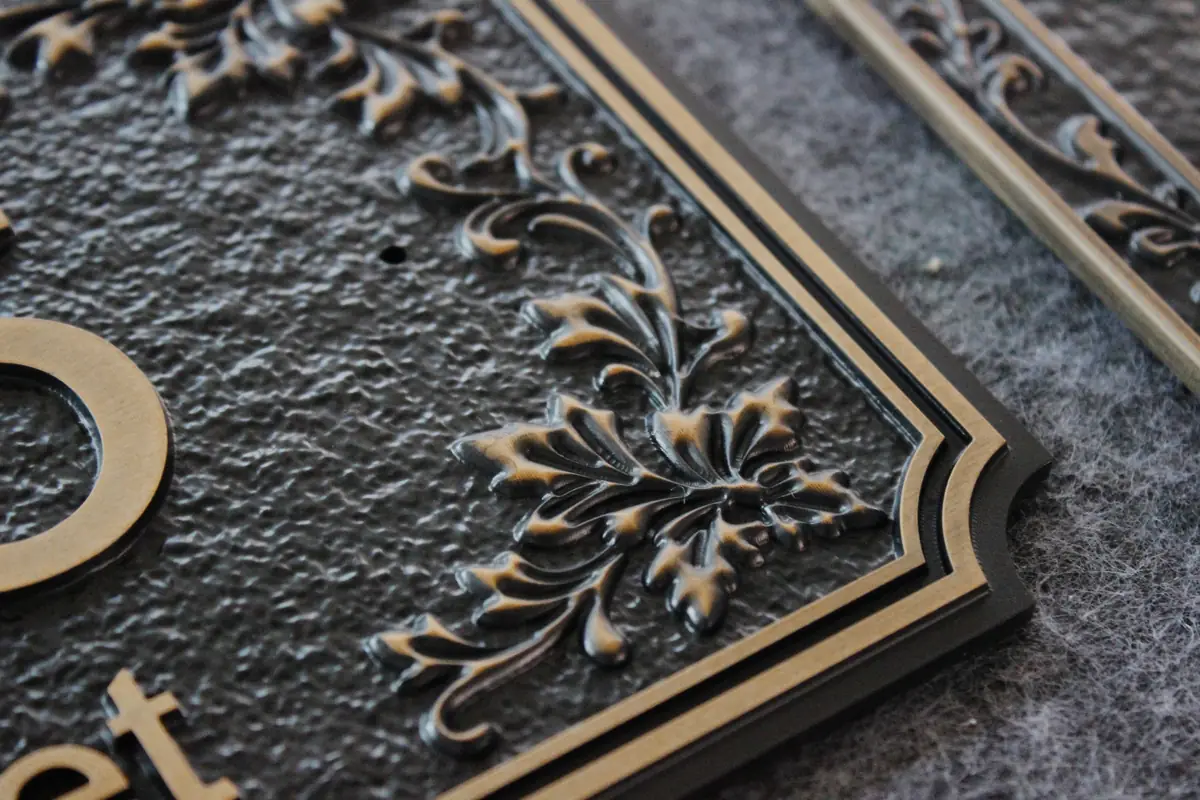
CNC-carved relief details make variable numbers, borders, and finish zones easier to control before bulk production.
1. The real question is not modern versus traditional
Sand casting has a long history and it is not useless. A cast bronze, brass, or iron plaque can feel heavy, traditional, and permanent. That is why casting still appears in memorial plaques, heritage signs, municipal markers, and repeated emblem work where one stable design is produced again and again.
The problem is that most commercial signage projects are not stable in that way. A hotel needs different room numbers. A villa project needs different addresses. A restaurant or club may adjust logo size after seeing a sample. A sign contractor may need several sizes for one project. In those cases, the old sand-cast route forces the buyer to think in molds before the design is fully settled. CNC carving starts from a file, so changes to numbers, borders, depth, icons, and dimensions are usually easier to review before bulk production.
2. CNC carving fits variable room numbers and address schedules
A CNC-carved sign begins as flat aluminum or another machinable panel. The file controls which areas are cut down, which borders stay raised, how deep the background should be, and how the numerals or letters catch light. For a hotel or apartment schedule, this matters because the visual system repeats, but the actual text changes from door to door.
With sand casting, each unique relief body tends to create more pattern or mold logic. That can make sense for one emblem repeated many times, but it becomes awkward when there are 80, 120, or 300 different room numbers. CNC carving lets the workshop keep one design language while changing digits, street names, suite labels, or icons from the digital file. The buyer still needs a sample, but the sample is reviewing the production route instead of locking the entire project into a mold too early.
3. Old cast iron is heavy, rougher, and harder to adapt
Cast iron has weight and historic character, but it is rarely the most practical choice for modern hotel interiors, apartment doors, boutique plaques, or export projects. It is heavy to ship, harder to mount on many door and wall surfaces, and the raw cast surface often needs additional cleaning, grinding, priming, painting, or protection before it looks refined enough for close-viewing hospitality use.
CNC-carved aluminum solves a different problem. It is lighter, easier to pack, easier to machine in small batches, and more suitable for controlled finishes such as black-gold, aged brass, antique copper, brushed metal, red bronze color, champagne gold, or painted backgrounds. It does not pretend to be cast iron. It gives buyers a cleaner, more controllable base for customized architectural signs.
4. CNC cost is driven by file, machine time, and finishing, not mold risk
The cost logic is different. Sand casting moves early cost into pattern making, mold preparation, metal handling, cleanup, and rework if the first design is not right. CNC carving moves more cost into artwork cleanup, toolpath planning, machine time, material thickness, sanding, polishing, coloring, assembly, and inspection.
For custom signage buyers, that shift is useful. A buyer can compare several finish directions, adjust the digit size, change a border, or approve a first sample before committing to a full room schedule. CNC is not automatically cheap, especially when deep relief and hand finishing are required. Its advantage is that the cost follows controllable production steps instead of forcing mold decisions too early.
5. The finish decides whether CNC looks premium
A CNC-carved plaque only looks premium when the finishing work is good. Relief depth, edge polishing, background texture, hand aging, color separation, clear coating, and packing protection all affect the final result. A flat gold paint on a weak carving can look cheap; a carved aluminum plaque with dark texture, polished raised numbers, and controlled aged brass highlights can look architectural and expensive.
This is why the RFQ should include finish references, not just the words bronze or brass. The buyer should mark whether the raised numerals are polished, whether the background is black, whether the border is aged, whether a logo uses UV color, and whether the sign is indoor or outdoor. CNC gives the workshop control, but the buyer still has to define what visual result should be controlled.
6. When should a buyer still choose casting?
Casting is still the right answer when the project needs solid metal weight, a traditional foundry story, deep sculptural relief, or one repeated emblem where the tooling cost can be spread across enough pieces. It can also be appropriate for certain heritage plaques, public markers, commemorative signs, or entrance features where the material itself is part of the value.
For most hotel room number signs, address plaques, boutique door signs, and mixed architectural signage packages, CNC-carved aluminum is the more practical first route. It can show the buyer a production sample, support many variants, reduce early tooling pressure, and still carry aged brass, black-gold, antique copper, or textured finishes after the carving is done.
Buyer Question
CNC-Carved Aluminum
Old Sand-Cast Metal / Cast Iron
Practical Recommendation
Will many signs have different numbers or text?
Strong fit because the file can change room numbers, street names, icons, and borders.
Less flexible because each unique relief body can create more tooling logic.
Use CNC for hotel rooms, apartment doors, villa address schedules, and custom batches.
Is heavy solid metal part of the design value?
Lighter and easier to ship, mount, and finish.
Stronger fit when weight and foundry authenticity matter.
Use casting for heritage plaques, memorial markers, or repeated solid emblems.
Is the design still changing?
Better during sample review because depth, border, number size, and finish can be adjusted from files.
Riskier if the buyer changes size or relief after mold planning.
Use CNC until the design is stable; reserve casting for stable feature pieces.
What creates the premium look?
Relief depth, edge quality, dark background texture, polished raised areas, and aged finish control.
Solid metal weight, natural cast character, and traditional material feel.
Choose by buyer expectation: visual finish, material authenticity, or both.
Key takeaways
CNC-carved aluminum is usually better for custom signs with changing numbers, sizes, borders, logos, or finish zones.
Old sand-cast metal and cast iron still work when weight, heritage character, and repeated stable designs matter.
For hotels and apartments, the mold-heavy route is often a poor fit because every room number can be different.
CNC does not replace solid brass or bronze in every case; it replaces unnecessary tooling friction in custom projects.
The premium result comes from carving depth and finishing control, not from the process name alone.
Sources and review scope
Supplier-specific statements use clearly identified first-party AeroSignage materials.
Local codes, accessibility requirements, engineering details, and order-specific claims must be confirmed for the destination market before production.
FAQ
Is CNC carving always better than sand casting?
No. CNC carving is better for variable custom signs, short-to-medium batches, and projects still being refined. Sand casting is better when the buyer needs solid metal weight, foundry authenticity, or the same stable design repeated many times.
Why is old cast iron not ideal for hotel room number signs?
Cast iron is heavy, harder to ship, and often rougher before finishing. Hotel room number signs usually need repeatable visual quality, many different numbers, clean edges, controlled color, and easier mounting, which makes CNC-carved aluminum more practical.
Can CNC-carved aluminum look as premium as cast metal?
It can look premium when the relief depth, edge polishing, dark texture, aged brass or copper finish, and packing protection are controlled. It will not have the same weight or natural aging as solid cast metal, so the buyer should decide whether the goal is visual quality or material authenticity.
What should I send before comparing CNC and casting?
Send artwork, size, quantity, sign schedule, finish references, installation surface, indoor or outdoor use, budget level, and whether solid brass, bronze, or iron is required or only the aged-metal visual effect is needed.
Fabrication & Materials
Continue with the manufacturing pillar or focused guides for CNC routes, materials, finishes, production files, samples, and quality review.