Written by: AeroSignage GlobalReviewed by: AeroSignage Editorial TeamPublished:Updated:
This planning checklist shows hotel owners, designers, procurement teams, and sign contractors how to turn renovation or new-build floor plans and location lists into a quote-ready signage package. It separates sign functions, schedule fields, finish tiers, approvals, packing, and replacement requirements.
Hotel signage package RFQs should coordinate room numbers, wayfinding, restroom signs, exterior plaques, samples, packing groups, and replacement planning.
1. Define renovation or new-build boundaries first
A new build can start from floor plans and a coordinated design package; a renovation must also record existing walls, doors, holes, power, substrates, retained signs, removal work, and installation phases. Mark which locations are in scope, excluded, awaiting survey, or dependent on another trade before asking for a package price.
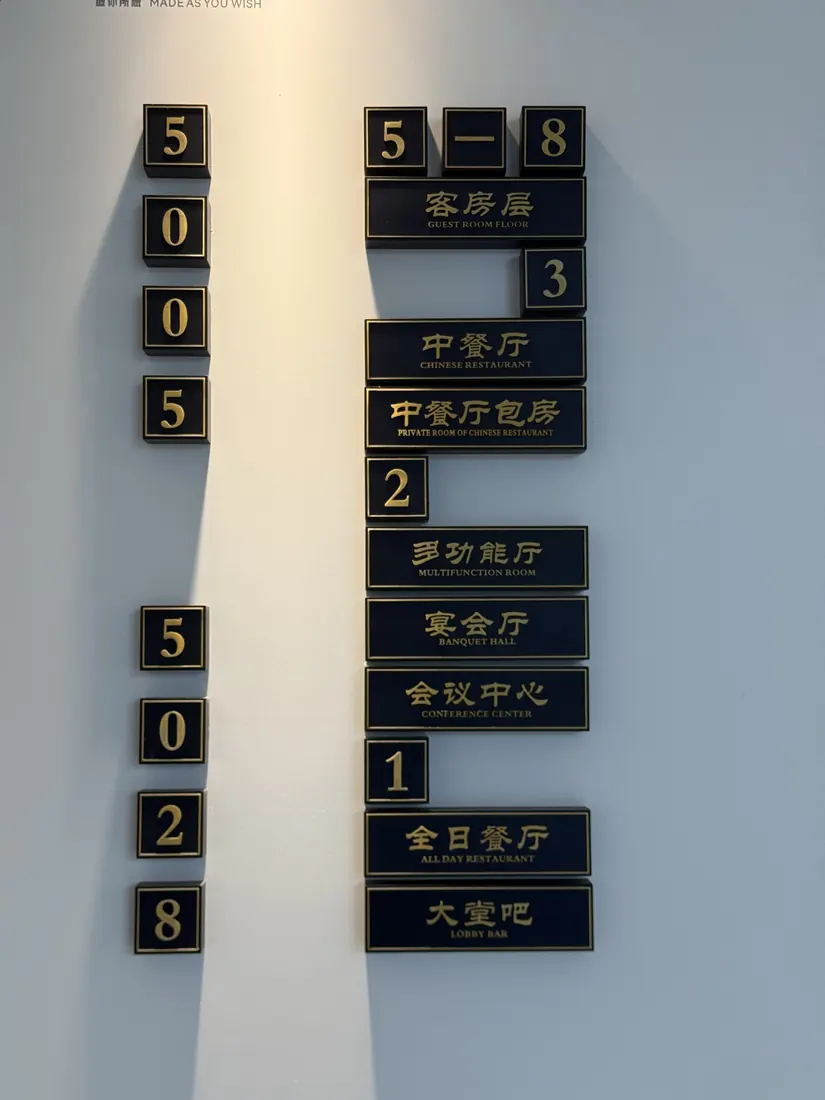
The schedule may include room numbers, restroom signs, directional plates, floor identifiers, elevator-area guidance, reception labels, staff-only signs, exterior identifiers, and feature plaques. Group them by zone, function, installation milestone, material route, finish tier, and packing sequence so every bidder prices the same boundary.
2. Build one location schedule and one message schedule
The location schedule identifies every placement, sign family, substrate, mounting condition, quantity, phase, and packing group. The message schedule carries room numbers, suite names, arrows, destination text, icons, languages, changing content, and spare quantities. Link both with a stable sign code so drawings, quotation rows, approvals, boxes, and replacement records agree.
Separate confirmed data from allowances. If the final room list, floor plan, icon set, or installation survey is pending, state the assumed quantity and revision date. This prevents a fast provisional price from being mistaken for a fixed package total.
3. Record buyer-approved code inputs separately
A decorative hotel room number sign and a restroom identification sign may share the same finish language, but they do not carry the same responsibilities. Restroom signs, tactile signs, accessibility signs, fire or safety signs, and local-code-sensitive signs should be reviewed against the destination market requirements by the buyer or project consultant.
A practical signage package can use one brand language while keeping technical responsibilities clear. Decorative room numbers can focus on guest experience and finish quality, while code-sensitive signs can follow buyer-confirmed specifications for pictograms, tactile characters, braille, contrast, mounting height, or local language.
4. Create sign families and sample priorities
Not every sign in a hotel needs the same production route. Standard guest-room doors may use a controlled CNC aluminum system. Suites, villas, reception areas, or private rooms may use deeper relief, black-gold contrast, aged copper, brass-effect numbers, stone-look panels, or lighting. Utility areas may use simpler plates with clear icons.
Turn those tiers into named sign families with drawings, dimensions, material, thickness, finish, mounting, message rules, and acceptance points. Select representative samples that test the highest-risk combinations rather than sampling every message variant. Record which sample approval unlocks each production family.
5. Issue an RFQ with exclusions, phasing, and handover requirements
Ask bidders to return pricing by sign family and identify exclusions, assumptions, sample charges, tooling, hardware, packing, freight basis, document responsibilities, and changes after approval. For phased renovation work, state release groups and the date each floor or zone becomes available.
Packing is part of scope control. Require labels by sign code, room, floor, zone, or installation phase, plus an agreed spare quantity and handover package containing approved artwork and finish references. These records reduce job-site errors and make later replacement orders more reliable.
Scope Check
What to Record
RFQ Output
Project boundary
New build or renovation, included locations, retained signs, removals, survey dependencies, and phases
Inclusions, exclusions, allowances, and revision date
Local codes, accessibility requirements, engineering details, and order-specific claims must be confirmed for the destination market before production.
FAQ
What is the first scoping difference between a renovation and a new build?
A renovation must document existing substrates, holes, power, retained signs, removal work, access, and phased installation. A new build usually starts from coordinated drawings but still needs ownership and release dates for final location data.
Why separate location and message schedules?
Locations and installation conditions may stabilize before room numbers, arrows, languages, or destination text. Linking both by sign code makes revisions and quotation assumptions easier to track.
How should a buyer create sign families?
Group signs that share construction, dimensions, material, finish, mounting, lighting, and acceptance criteria. Keep changing messages as scheduled variables instead of creating a different construction for every room.
How should code-sensitive signs appear in the RFQ?
List the buyer-approved tactile, braille, contrast, mounting, electrical, fire, language, and jurisdiction requirements separately, together with the party responsible for final review.
What should bidders return with their package price?
Request pricing by sign family plus assumptions, exclusions, sample and tooling charges, hardware, packing, freight basis, release timing, change rules, and replacement support.
Hotel Signage Package
Continue with the planning pillar or focused guides for FF&E scope, sign schedules, supplier review, samples, and package RFQs.